|
|||||||||||||


|
Bridge
Will Never Find a Truer Friend
|
|
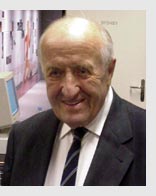
Marc Smith, working in Lausanne as part of the e-bridge team, interviewed IOC Vic-President Marc Hodler after the opening ceremony. It was in the early 1920s when the 6-year old Marc Hodler first went to his local ski club on the outskirts of Bern. Like the vast majority of children born in the alpine heartland, Marc learned to ski when barely able to walk. But, he was different from those other children - he could not only ski, but he could do so very quickly. He became a member of the Swiss National Ski team while still in his teams, but the Swiss elected not to participate in the 1936 Berlin Olympics. Indeed, it would be 1948 before they would return to the Olympic fold, by which time Marc was not quite as quick as he had once been. Marc was never destined to become an Olympic competitor, and in 1948 he became the first non-ski teacher to be placed in charge of his nation's Olympic alpine hopes.
In the flat world, it is not unusual for bridge groups to flourish in tennis or golf clubs. Here in the Alps, we should not therefore be surprised to learn that Marc's ski club had a bridge section, and it was there that he learned to play, aged nine or thereabouts. He is now 84 and has been playing this great game regularly for 73 years - surely close to a record. These days he plays about once a week or occasionally every second week. He admits that withdrawal symptoms started to set in during the Sydney Olympics, when he was so busy that he went four weeks without touching a card. After the 1948 Olympics, at the age of 33, Marc became the President of the Swiss Ski Federation - a post he was to hold for a staggering 47 years. He has only missed one Winter Olympic Games since 1948 - Melbourne in 1956, when the Swiss boycotted to protest Russia's occupation of Hungary. "Somebody has to express disapproval of these things," commented Marc. In 1960, he started attending the Summer games in connection with his I.O.C. work, and he has not missed one since. For any ordinary person, juggling the Presidency of your country's major sporting federation with a successful career as a full-time lawyer would be quite enough. Fortunately for bridge, Marc is a quite extra-ordinary person - he was also the President of the Swiss Bridge Federation from 1952 until 1988. While it was Marc's involvement with alpine sports that led to him becoming a member of the I.O.C., it is his tireless work in promoting the inclusion of the Mind Sports into the Olympic family that has become his burning desire in recent years. Significant progress has been made in this direction… "The first major step was to gain I.O.C. recognition of bridge as a sport," said Marc. "We were greatly assisted in achieving this goal by the game's standing as an official school sport in places such as China, France and many of the Scandinavian countries. We still have plenty of work left to do, though - we must change public perception by fighting the idea that Bridge is like any other card game. We co-operate very closely with chess organizations, but they have an easier job persuading people their sport is a pure skill event. Bridge must also achieve this." So, where do we now go from here? We asked Marc to explain the latest position. "The event we are watching this week is a vital part of the process. We will hold the 4th I.O.C. Grand Prix here in Lausanne again next year and then, in 2002, I hope we will be able to move the 5th I.O.C. to Salt Lake City, as part of entertainment program at the Winter Games. Although Bridge will not be an official medal sport in 2002, the winners will still receive something similar to Olympic medals. I am very optimistic that Bridge will be a full member of the Olympic Family by the time the Torino games come around in 2006. Many of our readers may wonder why bridge is trying to become a part of the Winter games, rather than the Summer event. "There are two major reasons," explained Marc. "For a start, there are approximately 16,000 competitors in the Olympic Village for the Summer Games. Add another 17,000 media people and you can see why we are not able to admit any additional sports to the Summer program. It is already a major undertaking to find a city with the infrastructure to handle such a major event, and if it became any bigger that task would be even more difficult. Not that it is easy to find somewhere capable of staging the Winter Games, with some 3,300 competitors and around 15,000 media people. "The other important consideration is that the Summer Games already has events every day from 9am until 10pm. At the Winter Games, the outdoor events have to finish by about 3pm because of the fading light. The very popular indoor events such as the Ice Skating are always staged in the evening, starting at around 8pm, so there is a gap between 3-8pm. Bridge could fill that gap in the schedule. "Staging the Winter Games requires five indoor stadiums with accommodation for spectators ranging from 20,000 at the largest down to 5,000. Bridge has a major point in its favor in that it requires no additional infrastructure. But there is still one significant stumbling block. There have been moves in the past to shift some of the indoor sports, such as Boxing, from the Summer Games to Winter. Up until now, such moves have failed because there is a rule that only games played on ice or snow qualify for the Winter Games. This is a hurdle that bridge must still overcome. I am sure that bridge players would be happy to play on ice if it meant gaining access to the Olympics, but I hope we can find a better alternative than that." "There is another problem insofar as 2002 is concerned. There is an unwritten rule that no new sports can be imposed on the local organizing committee once a city is awarded the Games. For example, snowboarding has acquired Olympic status in the past couple of years, but its inclusion in the 2002 games has been vetoed by the Salt Lake City organizers. Once again, though, bridge benefits because it does not require specialist facilities. "The primary logistics problem with Salt Lake City is accommodation. We are still lacking about 2,000 hotel beds for the athletes and officials. Adding another sport puts additional pressure on the local organizers by increasing that number. "I made sure that the organizers in Torino were instructed to consider the inclusion of Bridge before they were officially awarded the 2006 games. Of course, bridge also has a long and successful history in Italy and there are also some major sponsors that the Olympics would like to attract who are very keen to see Bridge included in the games. As we concluded our interview with Marc Hodler, we were joined by WBF President José Damiani who had announced that Bridge had taken another major step forward just this past Saturday in Monaco, at a meeting of the General Association of International Sports Federations. A vote was taken on the question of acknowledging both bridge and chess as sports, and of the 60 members present, 54 voted in favor and six abstained. There was not a single vote against the motion. "We have come a long way," concluded Marc. "There is still much to do, but we are moving steadily along the road. Events such as the I.O.C. Grand Prix can only further our progress." E-bridge thanks Marc Hodler for his time. On behalf of bridge players around the world, we also thank him for his efforts on behalf of the sport we all love. |
|
 Return to Top of
page Return to Top of
page |
To Bulletin Front Page |