 |
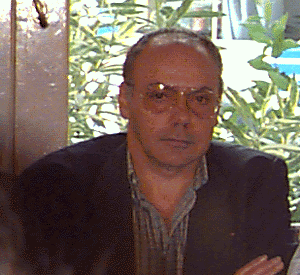
José Damiani, president of the World Bridge Federation, Hosni Zouari, president of the Tunisian Bridge Federation, hosted a special press conference at the Royal Azur yesterday. Damiani answered many questions concerning the WBF and bridge in general.
In answer to a query about the future of bridge in Africa, Damiani said, "Bridge for peace is a motto I believe in. This is our first time in an Arabic country. We hope that bridge will bring about more and more peaceful action in the world."
The Educational Foundation that was started a few years ago has not worked out, according to Damiani. However, the WBF is strongly supporting bridge teaching in schools, especially in zones and countries where bridge is not well-known. "But what we need is money. We need to find a sponsor. We've had good experience with this program in France and the United States, and China is beginning to put a program into action. But first we need the money, and then we need the teachers. This is one of my very main concerns."
About the move to the Olympics: "We're on our way to the Winter Olympics, but I don't see it happening until 2006. However, bridge is going to be a demonstration sport at the Asian Games in Bangkok next year." Damiani expects about 75 teams to take part in the Transnational Teams. If there as many as 20 teams that qualify as Senior teams, there will be a secondary event within the main event for Seniors. He pointed out that there are now 105 nations in the WBF. "About 50 million people play bridge, but there are two kinds of bridge - duplicate and rubber. Many of those millions enjoy the game at home rather than at the club or in a tournament. Bridge, along with music, is the only language that is understood throughout the world."
Omar Sharif, appearing at the press conference sponsored by the Tunisian Bridge Federation and the World Bridge Federation, called this tournament "a historic occasion for Tunisia, the first Arabic country to hold a world bridge championship." Why is Omar here in Hammamet? "I came here to promote bridge. The fact that the championship is in an Arabic country offers a great opportunity to make more countries aware of what a wonderful game bridge is. I have a great passion for this game, and this passion will never end."
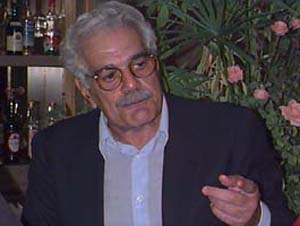 |
In fact Omar plans to play here - in the Transnational Teams. He doesn't know who his teammates will be, but one thing he does know - he will play. "I don't know how well I'll do - but I'll do my best. Lots of people have asked me why I have returned to live in Egypt. I'm not married, and I never will marry again - I was divorced 30 years ago. But now that I'm working less, I find that I need roots, I need to see my old friends. And my son lives in Egypt - I want to be close to my son."
In answer to a question about Arabic cinema, this is what Omar had to say: "Arabic cinema is in a crisis. This is not the richest time for culture and music in Arabic countries. We must continue to try to make peace - everyone wants peace. No mother wants to see her son go to war and get killed. It is necessary to sit down and put all that behind us. Then we can concentrate on the arts again. Arabic countries have a bad image in the world, and we deserve some of it. But this tournament is fine public relations for us. When the world discovers that all the best bridge players came to Tunisia, they will know that no one was afraid of being killed, no one was worried about terrorists. Add to that the fact that Aida was performed in Luxor in Egypt. The world will be interested in the fact that people like Sean Connery were there."
Omar was asked questions in three languages - Arabic, French and English - and he answered in the language in which the question was asked. On several occasions he stopped off to explain what he was saying in English. Immediately after the press conference, he was besieged for autographs by almost everyone present.
 Bermuda Bowl Rounds
